Active Imagination is a crucial part of a ‘toolkit’ that supports Individuation. Individuation is a core concept in Jungian psychology and perhaps the single most important task of adult life. As I continue to work through my own individuation, active imagination has become one of the tools I rely on.
What is Individuation?
Individuation is the lifelong psychological process through which an individual seeks wholeness through becoming their unique, undivided self. It is the journey of integrating the disparate parts of your personality—the conscious and the unconscious, the masculine and feminine (Animus/Anima), the Persona, the light and the dark (Shadow)—into a functioning, harmonious unified whole.
It is not about becoming perfect, but about becoming complete.
Jung referred to the nature of this journey using a very particular term: circumambulation. Borrowed from religious ritual practices of walking around a sacred object or temple, this term describes how the individuation process doesn’t move in a straight line toward the Self, but rather circles around it repeatedly. Each encounter with our complexes, symbols, archetypes, and unconscious contents deepens our relationship with the core of who we are, gradually integrating what we find with each revolution.
The Call to Individuate
In the first half of life, we focus on establishing an ego—building careers, finding partners, and adapting to social norms. However, to individuate, we must eventually turn inward to encounter the Self—Jung’s term for the total, central organizing principle of the psyche.
Individuation is typically not consciously initiated. Rather, this process is often initiated by a deep sense of dissatisfaction, anxiety, or internal conflict—a realization that the life you’ve built no longer fits your soul. This crisis signals that the carefully constructed identity you’ve allowed civilization to map on to you is broken, and the psyche is demanding a unique, congruent path forward.
Individuation and the Collective
Individuation is often misunderstood as a retreat into isolation. On the contrary, by fully realizing your own uniqueness, you establish an authentic relationship with the world, no longer unconsciously dependent on or blindly reacting against collective norms.
Active Imagination is one of the many tools for this work. It helps you find unique answers that reside within, transforming unconscious conflicts into conscious awareness, thereby empowering you to live a life determined by the Self, not by the external world.
Active Imagining: Dialoging With The Unconscious
This is my own approach. It synthesizes Carl Jung’s foundational work on Active Imagination with insights from Robert Johnson’s book, ‘Inner Work,’ as well as several other post-Jungians—integrated with contemporary understandings of trauma-informed practice and systemic psychology.
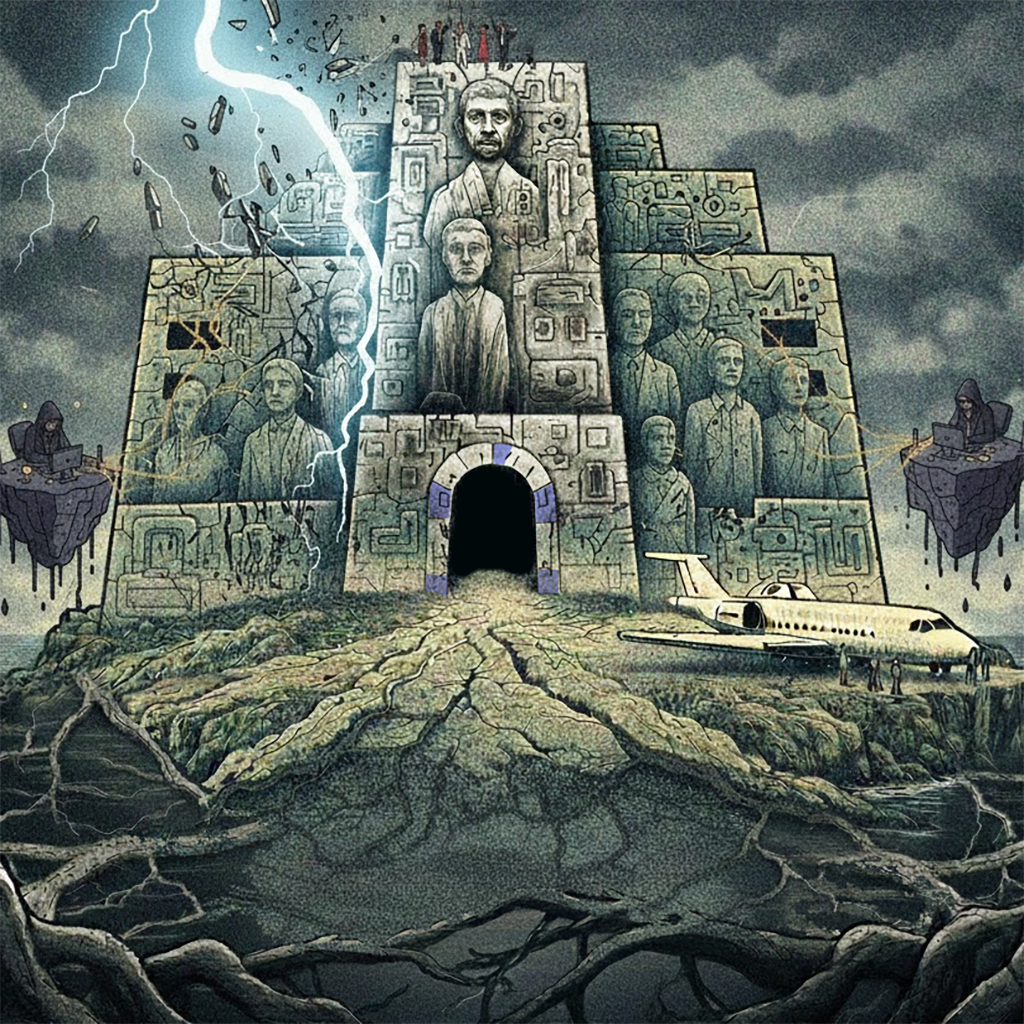
In one of my own sessions, I emerged asking myself: Is my boss simply asking me for a status report, or am I moving huge granite blocks to build a pyramid for my pharaoh?
This is the kind of unsettling, yet profoundly clarifying question that emerges when one engages in Active Imagining. In our hyper-connected, system-driven world, it’s easy to feel like an isolated cog, reacting only to surface-level irritations. But what if those irritations are actually the eruption points for profound, ancient, and collective psychological patterns?
The truth is, your psyche is in a tug-of-war with the systems we inhabit. And the language of that struggle is not logic; it’s symbols.
Jung stressed that we have an ethical obligation to engage with the material that surfaces from our unconscious. Active Imagining is the practice that makes this dialogue possible.
It’s not mere daydreaming. It’s an active, conscious engagement with the images, archetypes, and narratives that spontaneously emerge from the unconscious. The goal is to bring this material back into conscious life and integrate it. Doing so helps us to achieve a deeper understanding of ourselves and a more conscious way of living.
This process is critical because the systems we live in—from capitalism to social media to the corporate structure—are not merely external forces. They have become internalized. They affect us through syntonically activated (unconsciously assimilated) interplay between our individual shadow (the parts of ourselves we deny) and the collective shadow (the darkest, most primitive impulses of humanity).
When the tension between our authentic self (what Jung might call the ‘soul’) and these internalized systems becomes too great, the unconscious speaks. It does so through exaggerated, visceral, and often uncomfortable symbols—emerging through dreams or spontaneous images arising in our imagination.
The Pillars: Constellation, Amplification, Activation, and Integration
To understand how the unconscious surfaces these tensions, we need to look at the mechanisms that make Active Imagining so potent: Constellation, Amplification, Activation, and Integration.
1. Constellation: The Archetype Activates
In Jungian terms, to constellate means to activate an archetype or a complex, causing it to emerge from the unconscious and manifest in consciousness. In my experience, constellation is often the impetus to do an active imagination session. It is a signal that my unconscious has something to communicate to me.
When a complex (a cluster of emotionally charged ideas and images) is constellated, it carries a powerful emotional charge. The exaggerated anxiety you feel when your boss criticizes your work, for example, isn’t just a reaction to a single email. It’s the activation of archetypal material about power, obedience, and survival that carries the accumulated psychological weight of countless individuals who faced similar dynamics throughout history (feudal domination, guild apprenticeships, etc.).
The result: Seemingly minor situations trigger disproportionate psychological responses because they are activating unconscious, ancient, collective patterns.
2. Amplification: Giving the Symbol Context
Amplification is the process of enriching and deepening the meaning of a symbolic image from the unconscious by connecting it to universal parallels found in mythology, folklore, art, and religion. It’s how we move from a personal understanding (“I hate my job”) to a universal insight (“This situation is reenacting a millennia-old pattern of extraction and servitude”). Amplification can happen intentionally as you work through your psychic material, or unconsciously when you engage with the external world.
External amplification in our contemporary life through digital infrastructure—algorithms, social media, and 24/7 news—acts as a literal engine of unconscious amplification. It takes a flicker of emotion or the hint of an idea (a flash of anger, a seed of distrust) and expands its power and influence exponentially across a hyperconnected society. Disagreements are amplified into campaigns of vilification, turning minor sparks into raging fires of collective shadow-work on a mass-scale.
3. Activation: Emergence of Symbolic Patterns
Activation is a deliberate, multi-stage process where the conscious ego actively engages with the unconscious contents, distinguishing it from passive daydreaming.
Focus and Release
You begin by clearing your mind to create an open, receptive space, and then focus your attention on a specific piece of psychic material (e.g., a confusing dream image, a persistent negative mood, or a spontaneous fantasy). This focused concentration gives the unconscious content the psychic energy to ‘come alive’ and begin to unfold on its own.
Dialogue and Participation
This is the ‘active’ part. You consciously enter the imagined world and interact with the emerging material as if it were a real event.
- The psychic material will spontaneously and autonomously alter and develop its own plot and characters. This material will have its own telic movement; its own intent, direction, and purpose.
- You dialogue with the inner figures—asking questions or negotiating—rather than controlling or interpreting them away.
- You must maintain a dual role: observing the drama objectively while also participating in it with your honest personal reactions.
Giving Form
The spontaneous unfolding of the psychic process must be recorded and objectified in a tangible form. This is done by:
- Writing down the inner dialogue and narrative.
- Giving it a creative form through painting, writing, sculpting, dancing, or music.
The final crucial step is to reflect on the recorded material to understand the message from the unconscious and make an ethical commitment to integrate the resulting insight into your daily life. This entire dialectical procedure—bringing the conscious and unconscious into relation and allowing a third thing to emerge—is what Jung called the transcendent function, a key process of individuation.
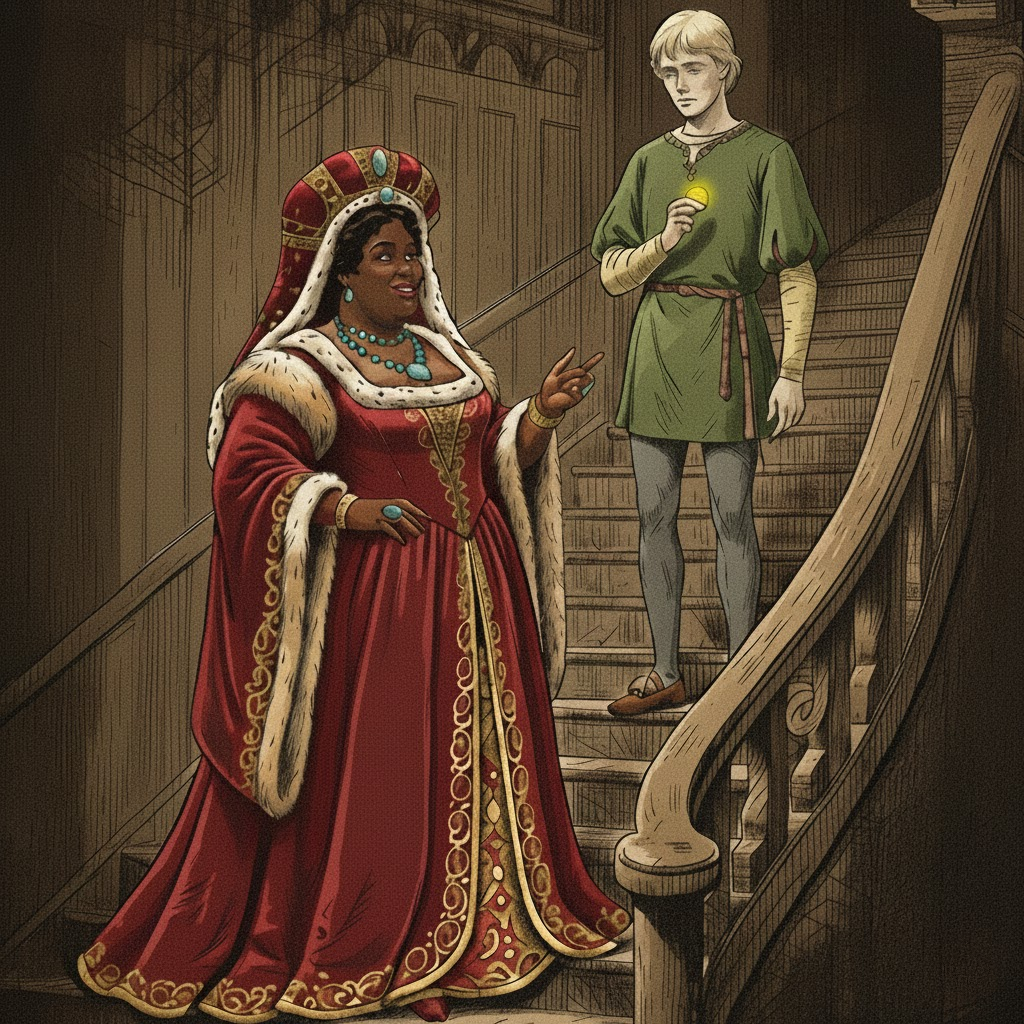
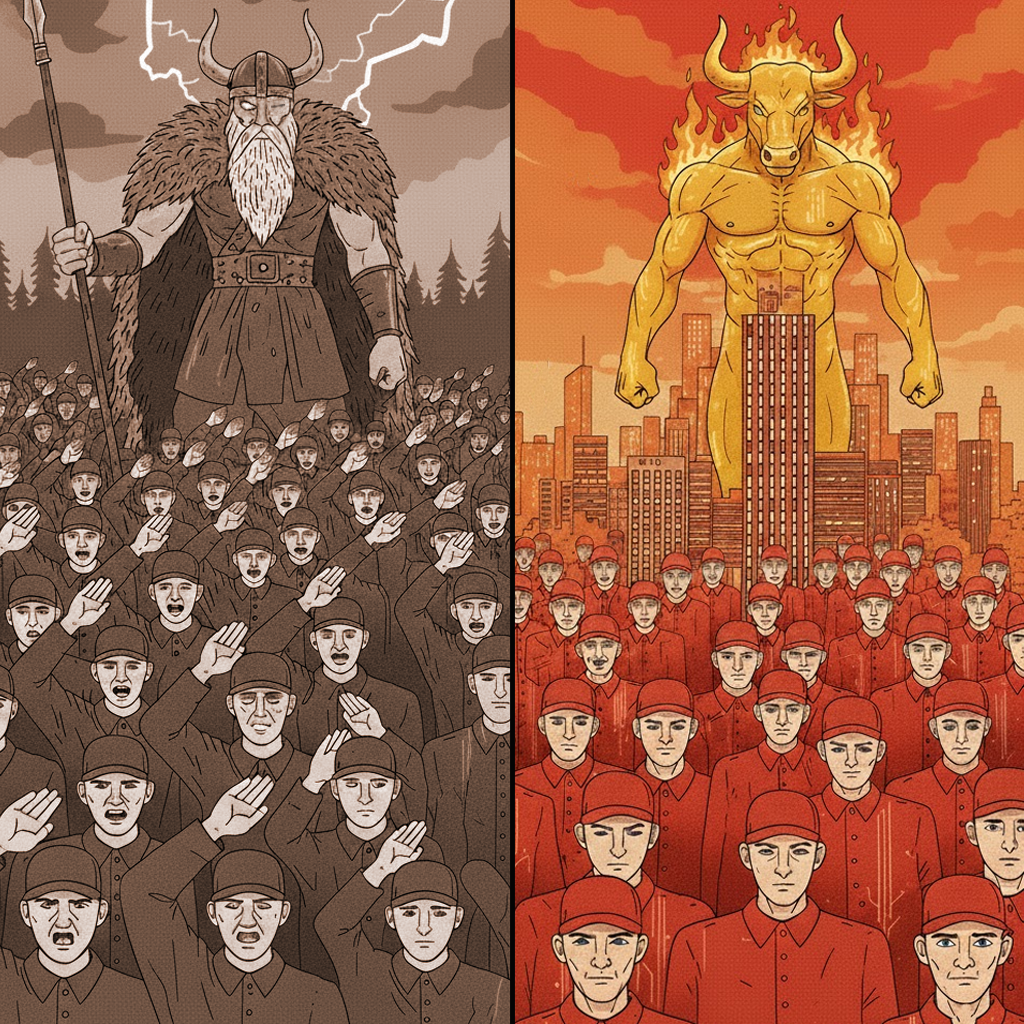
Through activation, what might seem like a superficial irritant may expose deeper, unsettling psychic tensions, expressed through symbolic material. These symbols are not meant to be literal examples; they do not dismiss the real physical, economic, or psychological impacts of the atrocities they reference. Instead, they serve to illustrate the raw psychic dimensions of our contemporary systems.
To illustrate the raw, disproportionate power of this psychic tension, here are examples of symbolic material that has emerged through my own Active Imagination work. Be aware that these symbols can be visceral and unsettling, as their power comes from collective, historical trauma and tension. They are designed by the unconscious to shock the ego into awareness.
| Real Life | Unconscious Symbol | Psychic Tension Illustrated |
| Corporate HR | Plantation Overseers | The tension of modern obedience and control cloaked in ‘caretaking’ and ‘responsibility’ language. |
| Social Media | Brothel | The transactional commodification of one’s intimacy, attention, and self-worth. |
| College | Sharecropping | Indebtedness and perpetual labor, where the fruits of one’s work are perpetually owned by the institution. |
Your unconscious will provide its own symbols based on your unique psyche and life experiences.
Then, the crucial work of Integration begins. Activation is the creative act of discovery, Integration is the long-term, ethical commitment to transform your life based on that symbolic truth.
4. Integration
Following Constellation, Amplification, and Activation, you’re ready for Integration. This is not a one-time event but a circumambulatory process: the same symbol may arise for engagement over weeks, months, years, or even decades. Each time you approach it from a slightly different perspective, gradually transforming your relationship to it. Integration is the process of making unconscious material functionally conscious—not just intellectually understanding it, but allowing it to transform how you live, perceive, and act in the world.
Core Integration Practices
Sustained Dialogue with the Symbol
- Continue Active Imagining sessions with the symbol that emerged
- Ask it questions: “What do you want from me?” “What are you protecting?” “What happens if I honor you?”
- Allow the symbol to evolve—your ‘pharaoh’ might reveal himself as a wounded king, or transform into something else entirely
- The symbol is not static; it’s a living psychological reality that wants relationship
Titration: Working in Manageable Doses
- Don’t try to integrate everything at once
- Approach the symbol, feel the emotional charge, then back away when it becomes too intense
- Think of it like dipping into hot water—brief immersions that gradually increase
- If you feel destabilized, flooded, or dissociative, you’ve gone too fast
- Integration happens through repeated small engagements, not one massive confrontation
- Honor your nervous system’s capacity; overwhelm prevents integration
Behavioral Embodiment
- If your unconscious says “you’re building pyramids for pharaoh,” integration asks: “What would change if I truly believed this?”
- Small acts of defiance or autonomy (setting boundaries, refusing performative work, reclaiming time)
- NOT necessarily quitting your job, but consciously choosing your relationship to it
- Living as if the symbolic truth matters—because psychologically, it does
Ethical Considerations
- Jung emphasized we have an ethical obligation to engage with what surfaces
- If your unconscious shows you that social media is a brothel (transactional intimacy), continuing to use it unconsciously is now a choice against yourself
- Integration means: conscious complicity (if you stay) or conscious withdrawal (if you leave)
- The point is ending unconscious participation
Shadow Reclamation
- The symbols often reveal your own rejected power
- If you view HR as plantation overseers, where is your inner overseer? Where do you dominate, control, or suppress others under the guise of ‘caretaking’ or ‘responsibility’?
- Integration requires owning the shadow—recognizing you contain both the oppressed AND the oppressor
- This is crucial: the symbol isn’t just about ‘them,’ it’s about YOU
Ritual and Creative Expression
- Draw, paint, sculpt, write about the symbol
- Create a personal ritual that honors the psychological truth (lighting a candle for ‘the worker under the pharaoh,’ writing a letter to the symbol)
- Physical, embodied engagement with the material moves it from head to body to lived experience
- Jung often had patients create mandalas, sand paintings, or sculptures
Journaling the Transformation
- Document how your perception changes over time
- Notice when the emotional charge decreases (a sign of integration)
- Track behavioral shifts: “I used to respond to my boss with anxiety; now I feel more like I’m playing a role in a known drama”
- The goal isn’t to eliminate the dynamic, but to participate consciously
Therapeutic Processing
- Ideally, work with a Jungian analyst or depth psychologist
- These symbols are powerful and can destabilize if worked with alone
- A skilled guide helps you navigate the material without being overwhelmed by it
What Integration Is NOT
- Not intellectual understanding alone – “Oh, interesting, my job is like slavery” changes nothing if you don’t engage with it
- Not immediate external change – You might stay in the same job, but your psychic relationship to it transforms
- Not ‘fixing’ or eliminating the tension – The pharaoh-worker dynamic may remain; you become conscious of it
- Not a one-time event – Integration is ongoing; the same symbolic material may emerge repeatedly over weeks, months, years, or even decades
The Result of Integration
When integration succeeds:
- The disproportionate emotional charge decreases
- You gain psychological freedom within the constraint (even if external circumstances don’t change)
- The symbol becomes a tool for navigation rather than a wound that controls you
- You can act from the Self rather than react from the complex
- Your life feels more congruent, more ‘yours’
The Warning
Jung was clear: unintegrated unconscious material does not simply disappear. If you gain the insight that ‘your boss is a pharaoh’ but do nothing with that psychic truth, the unconscious will escalate its demands.
This escalation often manifests as intensified projection. The unintegrated insight is unconsciously externalized, leading the individual to become increasingly obsessed with the external system’s failure and villainy. They refuse to see their own shadow complicity and instead become rigidly fixated on the external ‘evil.’
The escalation will continue with more vivid dreams, somatic symptoms, and a stronger urge to radically change external circumstances. The psyche demands you integrate what it reveals. This work, however, must be titrated—approached gradually—to avoid destabilization or retraumatization.
The Value of Symbols
The symbols derived from this process are indispensable because they illustrate the psychic dimensions of our engagement with these systems.
- You’re not just filing a company report. You are enacting an ancient drama of moving huge granite blocks to build a pyramid for your pharaoh.
- The great bank bailout of 2008 is not just an economic event. Symbolically, it becomes an analogy for the first Thanksgiving, when indigenous tribes provided food to the colonizers—who would later decimate them.
Once your unconscious provides such a symbol, you can work with it consciously. You can hold the symbol, understand its universal significance, and begin the work of integrating its painful truth. This is how Active Imagining allows you to identify unconscious patterns through their exaggerated psychic charge, eventually leading to a more aware, integrated, and soul-congruent life.