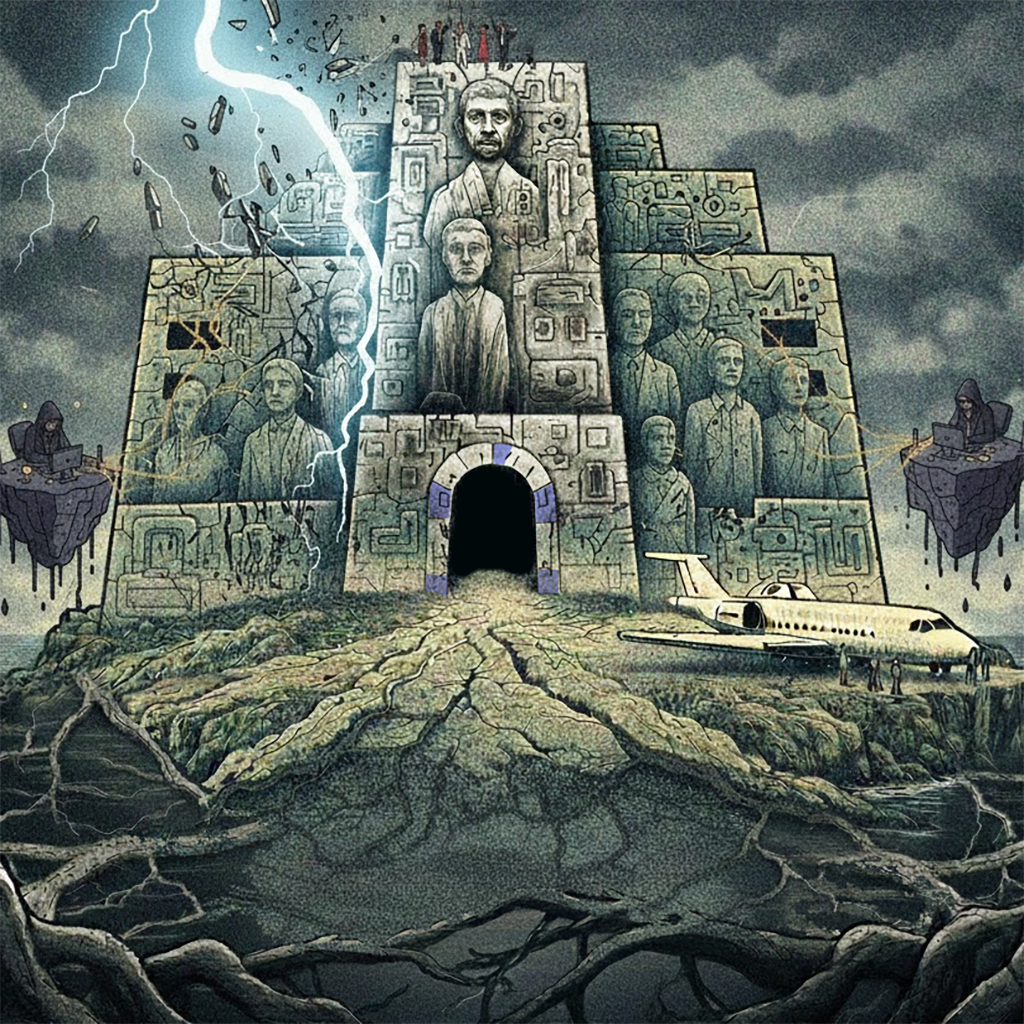
Available on Amazon Asleep at the Will: The Dormant Soul Complex
Framework for Moving Beyond Extractive Civilization
This book presents a speculative social philosophy examining why contemporary life often feels profoundly unfulfilling despite superficial success. The author argues that since the Bronze Age, human civilizations have developed increasingly sophisticated extractive systems that operate across economic, social, and psychological dimensions—creating an ‘ecosystem of extraction’ that affects individual psyches at the deepest level.
Drawing extensively on Jungian psychology, Marxian analysis, systems theory, and generative/regenerative principles, this work proposes a concrete pathway from extractive to generative/regenerative civilization through individual psychological development and organic community formation.
Core Concepts Explored:
- Extractive Systems – The sophisticated interrelationships between primary extractive systems and their subordinate paraextractive and subextractive networks, revealing how extraction operates with variable intensity across all facets of civilization
- The Dormant Soul Complex – A psychological condition, based on Jung’s theory of complexes, arising from the syntonic relationship between collective and individual shadow, creating internalized predispositions toward extraction and vital energy dormancy
- Individuation as Response – How Jung’s individuation process enables people to transform their relationship to shadow material and develop resistance to collective shadow influences
- Eudaimonic Sovereignty – The emergent capacity for authentic self-determination that allows individuals to identify, evaluate, and strategically disengage from extractive relationships and systems
- Koinonic Syntonomy – The natural formation of small, mutually beneficial groups among individuals developing sovereignty, creating localized generative/regenerative alternatives
- Autonomic Synergeia – How conscious communities organically evolve into larger generative/regenerative infrastructure, gradually transitioning societal power away from extractive systems
The conceptual framework demonstrates that extraction isn’t merely an economic phenomenon but represents a fundamental organizing principle of human civilization that operates through psychological, social, and structural dimensions. Unlike traditional political solutions that often reproduce extractive patterns, this approach suggests that meaningful transformation requires individual psychological work as the foundation for collective change.
Rather than proposing utopian visions detached from practical transformation, the book examines how decentralized, emergent transformation might unfold through networks of psychologically developed individuals. It acknowledges the deep complexity of extraction embedded throughout human systems while offering a practical methodology for those seeking to build alternatives to contemporary extractive patterns. The vision presented is intentionally organic and evolutionary rather than revolutionary, emphasizing sustainable transformation over rapid disruption.