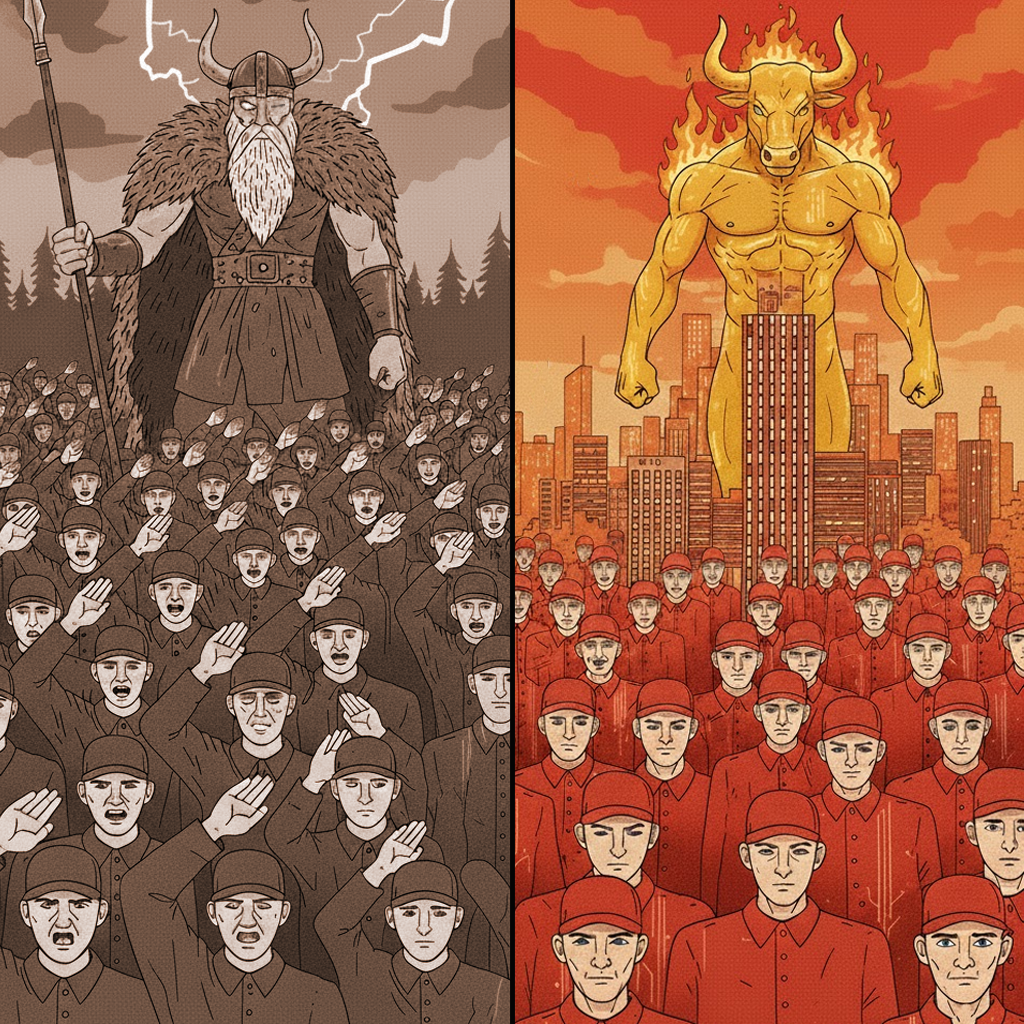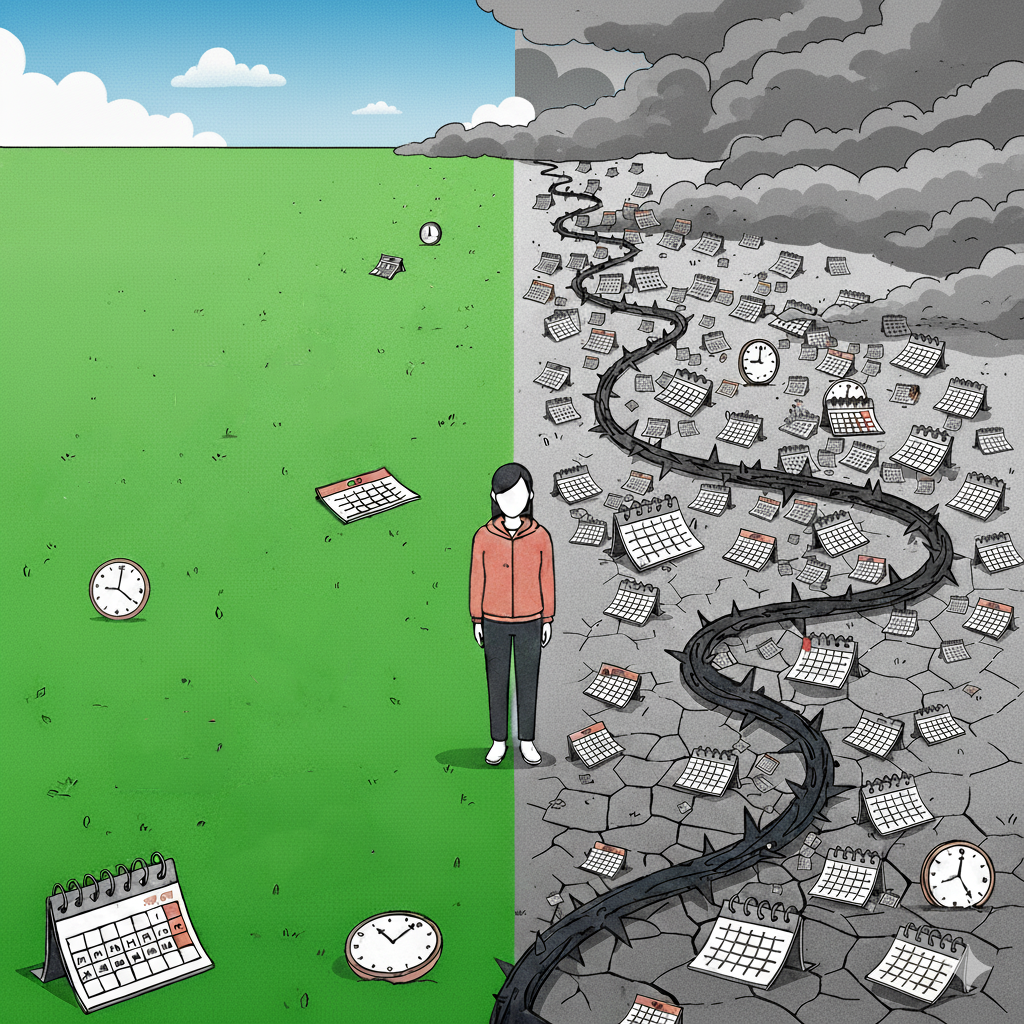
Why does checking work email at 9 PM feel normal? Why do we apologize for taking vacation days we’ve earned… if we take vacation at all? Why does saying “no” to after-hours requests feel impossible, even when we know it’s unreasonable?
The answer lies in understanding what are referred to as extractive systems—organizational structures that siphon more from people than they give back, concentrating benefits upward while leaving individuals depleted. But here’s the thing: modern extraction doesn’t look like the feudalism of medieval times. It’s far more subtle, and far more sophisticated.
The Old Extraction vs. The New
Medieval serfs knew exactly what was being taken from them. The lord of the manor was divinely ordained to extract crops, labor, and military service in exchange for protection and land access. The terms were brutal but clear—peasants were bound to the land, but the boundaries of that arrangement were explicit.
Today’s extraction is different. Instead of legal bondage, we have psychological conditioning. Instead of physical chains, we have the invisible bonds of hyperconnectivity. And instead of armed overseers, we have something far more efficient: we police ourselves.
The Three Pillars of Modern Extraction
Normalization: Making the Abnormal Feel Natural
Twenty years ago, getting work calls at dinner was an emergency. Today, it’s Tuesday. We’ve been slowly conditioned to accept constant availability as the price of professional respectability. The creep happened so gradually that we barely noticed—first it was ‘during busy periods,’ then ‘for important clients,’ then ‘to stay competitive.’
The shift happened through a thousand small accommodations. A quick response ‘just this once’ during vacation. Staying late for a project that wasn’t actually urgent. Accepting meeting invitations during lunch because your calendar showed you as ‘free.’ Each concession feeling reasonable in isolation, yet collectively creating a new normal where availability became the default expectation.
Internalization: When We Become Our Own Overseers
The most devious aspect is how we become complicit in our own exploitation. We develop internalized expectations that make resistance seem impossible. It’s no longer the boss demanding you work weekends—it’s you experiencing guilt for not offering to work weekends.
We tell ourselves stories: “I’m building my career.” “This is what commitment looks like.” “Everyone else is doing it.” We consume ‘hustle porn’ that disguises self-extraction as self-actualization, making resistance feel like personal failure rather than systemic critique. Meanwhile, the system doesn’t have to force us anymore. We force ourselves.
Technological Intrusion: Erasing the Boundaries
Digital tools promised freedom—work from anywhere, flexible schedules, better work-life balance. Instead, they eliminated the protective barriers that once shielded us. There’s no leaving the office when the office is everywhere. There’s no end to the workday when productivity apps gamify our every moment.
The technology, as a tool itself is largely neutral, but it becomes a powerful device for extraction in the hands of extractive systems. Push notifications that feel urgent but aren’t. ‘Productivity’ software that tracks our every click. Video calls that could have been emails, scheduled during lunch because “everyone’s calendar was free.”
The COVID-19 pandemic accelerated this boundary erosion at unprecedented speed. What had been a gradual twenty-year creep suddenly became an overnight transformation. In March 2020, millions of workers found their kitchens becoming conference rooms and their bedrooms becoming offices. The ’emergency’ exception became the permanent rule.
The pandemic didn’t just normalize remote work—it normalized the complete colonization of domestic space by professional demands. We accepted video calls with crying children in the background as professional reality. We internalized guilt about our ‘unprofessional’ home environments rather than questioning why work had invaded our most private spaces. The temporary became permanent, not through explicit policy but through the same psychological conditioning, each accommodation feeling reasonable in isolation.
Most tellingly, when restrictions lifted, many organizations kept the pandemic-era expectations of constant availability without the pandemic-era understanding that these were emergency measures. The boundary erosion that took decades to establish pre-2020 was completed in months, creating a new baseline of extractive availability that we’re still living with today.
The Psychological Toll
Unlike medieval extraction, which primarily took physical labor and material goods, modern systems extract something more fundamental: our capacity for autonomous living. They don’t just take our time—they take our ability to imagine saying no.
This isn’t just about being tired from long hours. It’s about a total system that transforms human beings into infinitely available resources, always on call for corporate objectives. The extraction becomes so complete that we lose touch with our own needs, our own rhythms, our own lives.
We become strangers to ourselves, knowing more about our company’s quarterly goals than our own dreams, more familiar with our productivity metrics than our own well-being.
Why This Matters Now
This pattern isn’t limited to work. We see it in social media which extracts our attention and data while promising connection. In financial systems that extract wealth through complexity and fees while promising security. In educational institutions that extract time and money while promising opportunity.
Understanding these patterns isn’t about becoming paranoid or cynical—it’s about developing what we might call ‘extraction literacy.’ Just as we learned to recognize manipulative advertising, we need to recognize extractive systems and their psychological mechanisms.
The Way Forward
The first step is seeing the pattern clearly. When you experience that familiar knot in your stomach as you reach for your phone after hours, when you catch yourself apologizing for basic limits, when saying “no” seems dangerous—that’s the apparatus working on you.
The second step is remembering that these feelings aren’t natural or inevitable. They’re manufactured by systems designed to benefit from your constant availability.
The third step is starting small: setting one boundary, ignoring one non-urgent notification, taking one actual lunch break. Not because it’s easy, but because reclaiming your autonomous capacity starts with tiny acts of sovereignty.
This analysis draws from a comprehensive framework for understanding extractive systems across history and scale, from examining entire civilizations in the Bronze Age to contemporary personal relationships.
If you’re interested in going deeper—check out my book Asleep at the Will: The Dormant Soul Complex which explores extractive systems and psychological resistance.
Question for reflection: Where in your life do you feel the pull toward constant availability? What would it look like to reclaim just one hour of truly uninterrupted time each day?