The Goebbels-Horst Wessel effect is a textbook example of propaganda that successfully manipulated the collective shadow of the German people, leading to a profound and dangerous psychological transformation of the nation.
The Goebbels-Horst Wessel Effect
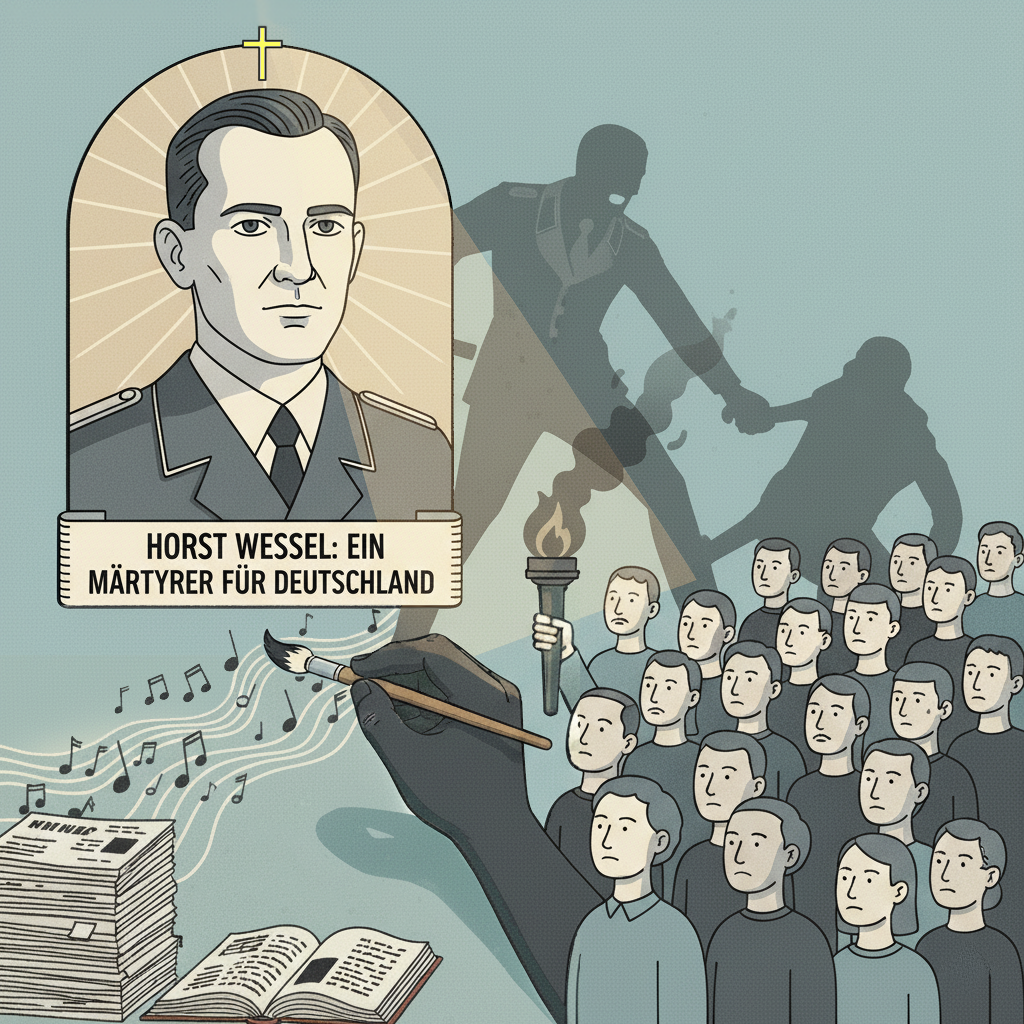
In historical terms, the Goebbels-Horst Wessel effect refers to Joseph Goebbels’s deliberate use of an individual’s death to create a national martyr for the Nazi cause. Horst Wessel, a minor Nazi street fighter, was killed in a brawl in 1930. The shooting stemmed from a personal dispute over Wessel’s living situation and his relationship with his landlady, who was the former lover of a KPD (Communist Party of Germany) associate.
Goebbels, however, spun his death into a heroic martyrdom at the hands of ‘Communist murderers.’ This myth was amplified through all available media, most notably through the ‘Horst Wessel Song,’ (originally titled ‘Die Fahne hoch’ – ‘The Flag on High’), which became an anthem for the Nazi Party. This manufactured narrative served three key purposes:
- It provided a unifying symbol of sacrifice for the Nazi movement.
- It justified and legitimized the Nazis’ own political violence against their opponents.
- It galvanized support and emotional loyalty for the party, turning Wessel’s death into a rallying cry for vengeance.
Jungian Perspective: Manipulation of the Collective Shadow
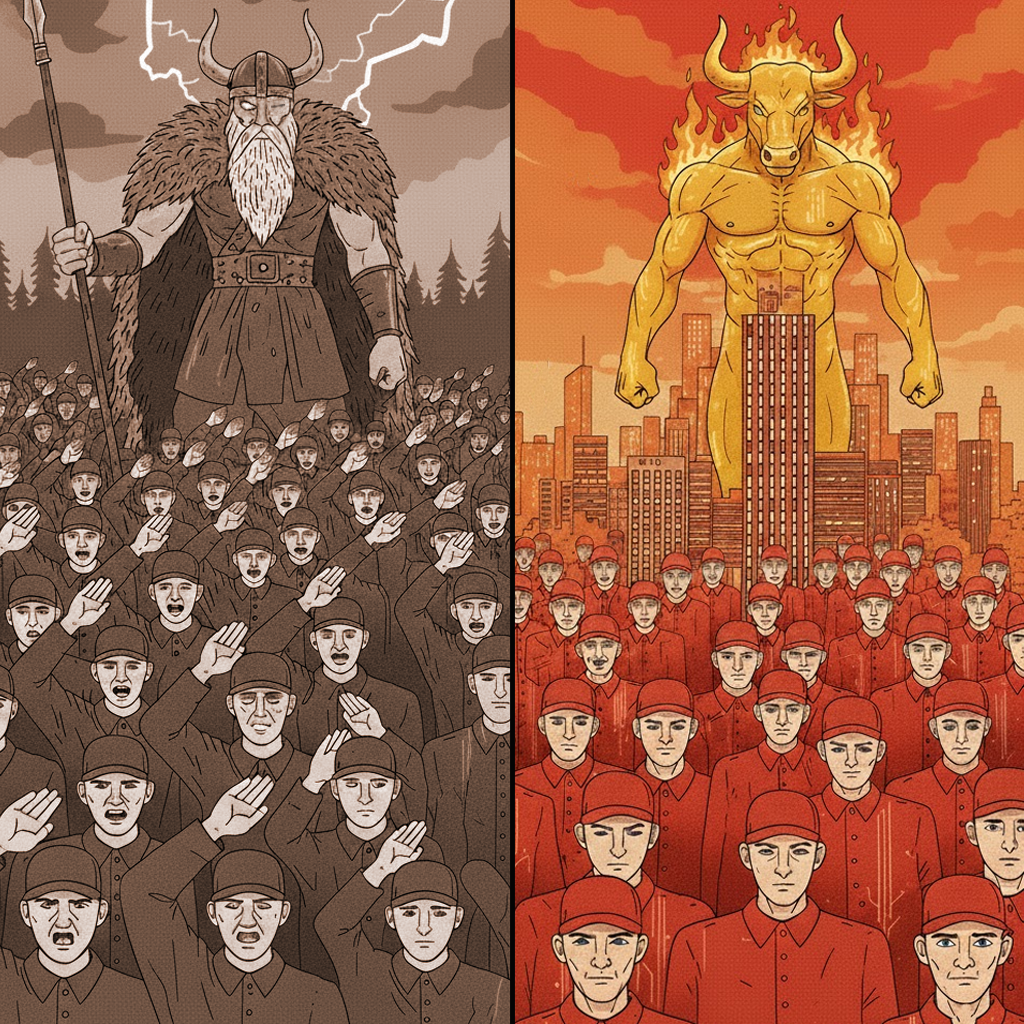
From a Jungian viewpoint, Goebbels’s tactic worked because it tapped into the collective shadow of the German people. The unconscious repository of their society’s repressed, negative, and primitive aspects—the aggression, hatred, and desire for power—that were deemed socially unacceptable. This was achieved through two main functions:
Projection of the Shadow: Rather than confronting their own collective darkness, the German people were offered a convenient external target to project it onto: the Communists and, more broadly, the Jews and other ‘enemies of the state.’ Goebbels’s propaganda effectively said, “Our violence isn’t from us; it’s a justified response to their evil.” This psychological mechanism operated on multiple levels: it allowed some Germans to act out their own aggression while feeling morally righteous, but more significantly, it enabled widespread approval and complicity in state-sanctioned atrocities. The projection didn’t just provide an outlet for personal violence – it created a moral framework that made systematic persecution, deportation, and ultimately genocide feel not just acceptable but necessary and virtuous to millions of ordinary citizens who never directly participated but whose consent and approval made the machinery of the Holocaust possible.
Activation of Archetypes: The propaganda also activated powerful, universally understood archetypes within the collective unconscious:
- The Hero/Martyr Archetype: Wessel was presented not as a brawler but as an innocent, Christ-like figure who died for the nation. This resonated deeply and evoked a sense of tragic loss that demanded to be avenged.
- The Scapegoat Archetype: The Communists became the perfect scapegoat, carrying the collective sins and negative projections of the German people. By persecuting this external enemy, the German public felt a sense of cleansing and moral purpose.
- The Puer Aeternus (Eternal Youth) Archetype: The focus on Wessel’s youth and idealism tapped into a longing for a pure, uncorrupted ideal for the nation. His death was a poignant symbol of this ideal, making the act of avenging him all the more urgent and emotionally charged.
Synthesis: Weaving the Facts and the Feelings Together
The Goebbels-Horst Wessel effect, therefore, was a masterful piece of political engineering that succeeded by exploiting deep-seated psychological tendencies. It took a factual event (Wessel’s death) and, through a powerful propaganda apparatus, turned it into a mythic narrative that served as a catalyst for a collective psychological transformation. Goebbels didn’t just sell an ideology; he created a symbolic reality that allowed the German people to externalize their inner darkness. By providing an outlet for the collective shadow and activating potent archetypes, he created a mass movement of hatred and violence that was perceived by its participants as a righteous struggle. This dangerous fusion of political propaganda and psychological manipulation made the Nazi regime’s atrocities possible on a scale that would otherwise be incomprehensible.