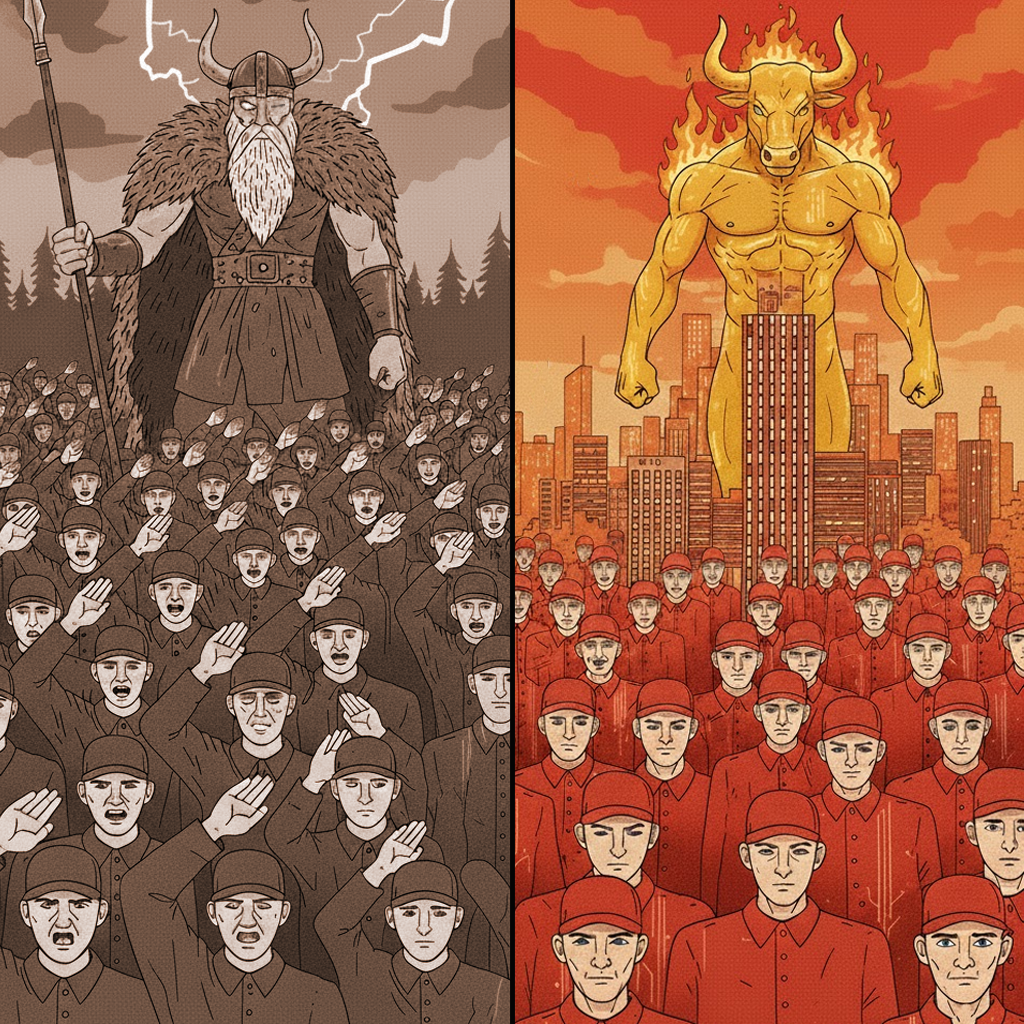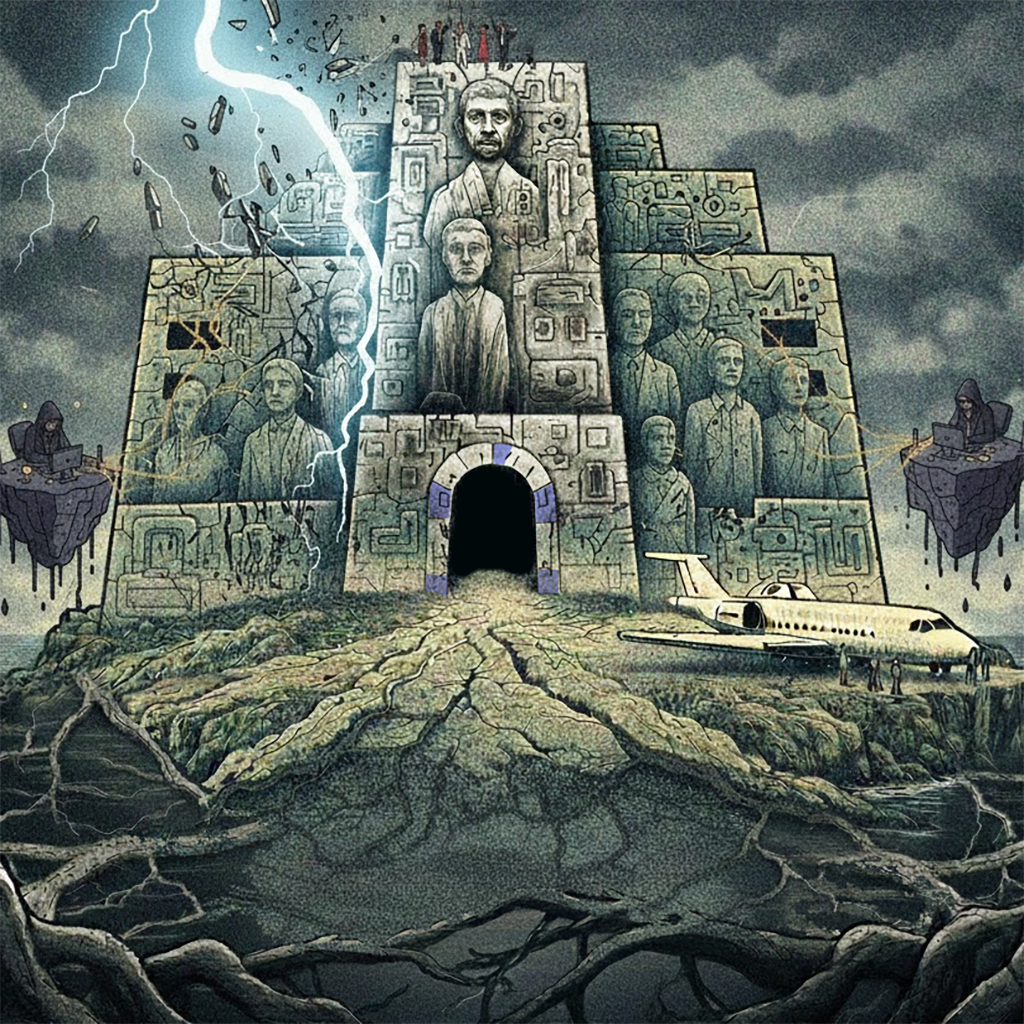
When collective shadow eruptions demand your participation, your refusal becomes an act of conscious rebellion. It’s a powerful impulse, often masking itself as a quest for justice or a yearning for belonging.
The Daily Invitation to Chaos: Your Attention Is Sacred
Every morning, you wake up to a world that invites you to participate in its collective shadow eruptions. The outrage du jour dominates your news feed. The political theater demands your emotional investment. The cultural controversy insists you pick a side. Social media algorithms serve up the perfect provocations designed to trigger your reactivity.
Attention is sacred. It is the currency of consciousness and the engine of your creative power. When you willingly sacrifice it to chaos, outrage, and reactive loops, you are relinquishing your most valuable resource to fuel the very disruption that seeks to diminish you.
Most people take the bait. They dive headfirst into the collective shadow projection, convinced they’re fighting the good fight while unconsciously feeding the very dynamics they claim to oppose.
But what if there’s another way to engage with reality?
Understanding Collective Shadow Eruptions
Jung observed that when a society’s collective shadow—all its unacknowledged or disowned darkness, unintegrated impulses, and repressed material—is activated, it erupts through events across the collective psyche. These aren’t random occurrences but manifestations of deeper psychological tensions seeking expression.
In our hyperconnected age, these eruptions happen at unprecedented speed and scale. A single incident can trigger massive projection cycles where millions of people simultaneously, and very publicly, cast their own shadow material onto convenient targets. The result is a feeding frenzy of righteous indignation, moral superiority, and tribal warfare—all while participants believe they are engaged in noble causes.
The collective shadow doesn’t discriminate by ideology. It operates through any group willing to project their darkness onto ‘the other side’ while remaining blind to their own participation in the dynamic.
But here’s crucial nuance: Not every collective response is a shadow eruption. Sometimes widespread concern reflects genuine injustice that demands attention. The key is learning to distinguish between reactive projection and conscious collective awareness. Shadow eruptions typically involve disproportionate emotional charge, tribal ‘us-vs-them’ thinking, and more energy spent condemning others than building solutions. Legitimate collective concerns tend to generate sustained, constructive action rather than performative outrage cycles.
The Trap of Righteous Participation
When collective shadow eruptions occur, they create powerful psychological pressure to participate. Not engaging can feel like a moral failure.
This pressure is the collective shadow’s most insidious mechanism; it makes participation feel virtuous while actually perpetuating the very dynamics it claims to oppose. Every post of outrage, every shared article of condemnation, every social media argument feeds more energy into the collective shadow rather than resolving it.
The trap is believing that your own participation is somehow different—that you’re fighting for truth and justice while others are merely projecting their darkness. This is precisely how the collective shadow maintains itself: by convincing participants they are conscious warriors rather than unconscious shadow carriers.
And yes, I see the irony here—proposing that conscious non-engagement is superior can become its own form of spiritual superiority. The goal isn’t to create another tribe of ‘awakened’ people looking down on the ‘unconscious’ masses. The goal is honest self-examination: Am I responding from wisdom or reactivity? From authentic values or triggered emotion? From my center or from the collective’s pull?
Sovereignty as Response
Eudaimonic sovereignty—living from your authentic center in alignment with genuine flourishing—offers a completely different approach. Instead of reactive participation, it provides conscious non-engagement.
This isn’t about political apathy or spiritual bypassing. It’s about recognizing that most collective shadow eruptions are psychological phenomena rather than rational discourse, and that engaging with them on their own terms only strengthens the underlying pathology.
Important distinction: This approach isn’t universally applicable. If you’re directly affected by an issue—if it’s your community being harmed, your rights being threatened, your safety at stake—then your engagement isn’t shadow projection, it’s self-preservation and justice. Conscious non-engagement is a privilege available to those with enough safety and distance to choose their battles thoughtfully.
From your sovereignty, you can observe collective shadow eruptions with clarity:
- You recognize the projection dynamics at work rather than getting caught in the content.
- You maintain your own center instead of being pulled into tribal reactivity.
- You respond from wisdom (or maybe don’t respond at all) rather than reacting from triggered emotion.
- You contribute to actual solutions rather than feeding the problem.
The Practice of Conscious Non-Engagement
Developing this capacity requires practical discipline:
1. Pause and Self Check-in
When you feel the urge to engage with collective outrage, stop. Seriously. Just stop. Before reacting, assess your internal state. Ask yourself:
- What is my current level of emotional charge? (e.g., Am I angry, indignant, or fearful?)
- Why am I so affected by this?
- Did I personally know the person(s) involved in the original incident?
- Do I know, with reasonable certainty, that the information is true?
- Am I directly affected by this issue, or is this triggering something unrelated in me?
- If I engage, am I doing so to contribute to a solution or to express my emotional state?
Note: A heightened emotional charge, especially one disproportionate to your personal connection to the event, suggests a syntonic activation—a psychological resonance between your own unintegrated shadow and the collective shadow’s dynamics. This is a critical signal to stop and step back.
2. Examine Your Own Shadow
Use the triggering moment as an opportunity for self-examination. Instead of projecting onto external targets, ask: What shadow material is being activated in me that I could integrate rather than project? Think of this as shadow hygiene.
3. Choose Generative/Regenerative Action Over Symbolic Performance
If a situation genuinely calls for your engagement, respond from your authentic values rather than reactive emotion. This means prioritizing constructive action that contributes to real solutions over symbolic gestures designed for validation.
Here’s how to distinguish between authentic action and performance:
Symbolic Performance tends to:
- Focus on expressing your moral position rather than solving problems
- Seek validation from your in-group
- Generate more heat than light in discussions
- Disappear when the next outrage cycle begins
- Cost you little beyond time and emotional energy
Generative/Regenerative Action tends to:
- Address root causes rather than symptoms
- Continue even when no one is watching
- Build bridges rather than walls
- Require sustained commitment and often personal sacrifice
- Create measurable positive change in the world
For example: Spending two hours in an angry, public argument on social media to prove your moral superiority is performance. Dedicating those two hours to volunteering at a local charity related to the issue or making a private donation is generative action. The difference is choosing solution-building outside the conflict over self-expression within it.
4. Maintain Perspective
Remember that most collective shadow eruptions are temporary psychological phenomena. The issue that seems earth-shatteringly urgent today will often be forgotten within days or weeks, replaced by the next crisis demanding immediate emotional investment.
But also remember: Some issues that generate collective response are genuinely important and deserve sustained attention beyond the initial outrage cycle. The test is whether people continue working on solutions after the social media storm passes.
When Not Engaging Becomes Revolutionary
In a culture addicted to outrage and tribal warfare, choosing not to participate becomes a revolutionary act. Your refusal to take the bait:
- Breaks the cycle of projection and counter-projection.
- Models conscious response rather than unconscious reactivity.
- Protects your sacred attention and preserves your energy for authentic contribution rather than symbolic performance.
- Demonstrates sovereignty over your own psychological state.
- Builds genuine emotional resilience by strengthening your capacity to remain centered amid collective turbulence.
This isn’t passive withdrawal but active consciousness. You’re choosing to engage with the external world from your own authentic ground rather than being swept up in collective psychological dynamics.
And sometimes, conscious non-engagement means recognizing when your silence enables harm. True sovereignty includes the discernment to know when not speaking up becomes complicity. The goal is conscious choice rather than unconscious reaction—whether that choice is engagement or non-engagement.
Building Real Alternatives
The ultimate goal of conscious non-engagement isn’t withdrawal but the creation of genuine alternatives. When you refuse to feed collective shadow dynamics, you preserve energy and clarity for building the regenerative systems and conscious communities that could actually address our underlying challenges.
Instead of arguing about symptoms, you work on causes. Instead of fighting shadow projections, you create spaces where authentic dialogue becomes possible. You replace the urge to condemn with the practice of empathy, recognizing that genuine connection is the ultimate solvent for tribal conflict. Instead of performing moral superiority, you embody the changes you want to see in the world.
The Choice Is Always Yours
Every collective shadow eruption presents the same fundamental choice: Will you be swept up in the unconscious dynamics, or will you respond from conscious sovereignty?
The pressure to participate will always be intense. But you have another option. You can observe the eruption with clarity, tend to your own inner work, and contribute to the world from your authentic ground rather than your triggered reactivity.
This choice looks different for everyone. Someone directly threatened by an injustice may need to fight back immediately and publicly. Someone with privilege and distance might serve better by building long-term solutions behind the scenes. Someone with a platform might use it thoughtfully rather than reactively. The key is conscious choice rather than unconscious compulsion.
This is what eudaimonic sovereignty looks like in practice: the capacity to remain centered in your own authentic flourishing while the collective loses its mind around you—and the wisdom to know when losing your mind might actually be the conscious choice.
The world needs people who can hold this kind of consciousness. It also needs people willing to act when action is called for. Sometimes, you might be both.
The choice to engage consciously rather than reactively isn’t just personal development—it’s a contribution to collective healing. Every person who refuses to take the bait weakens the collective shadow’s grip and creates space for more authentic responses to emerge.
Will you be one of them?