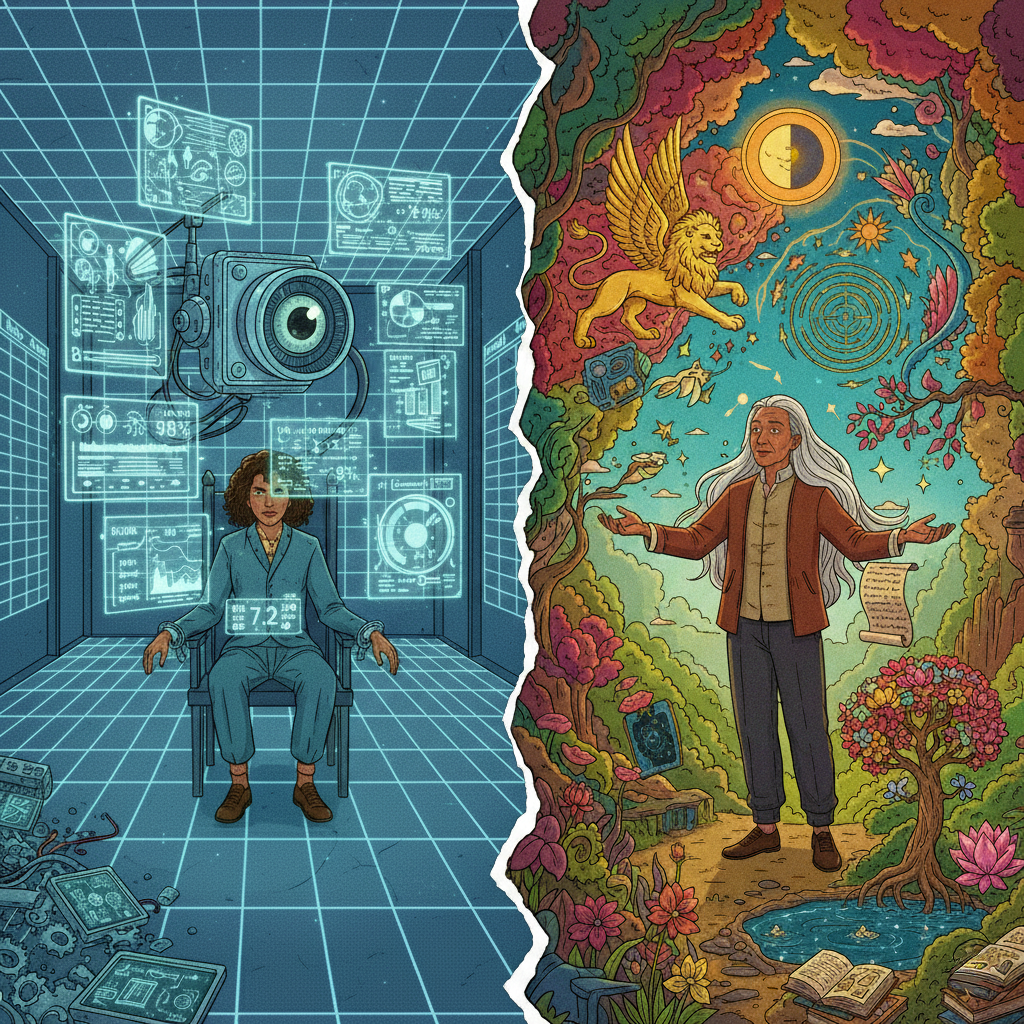
In our past few decades, we’ve fallen deeply in love with numbers and stats. We meticulously track our steps, optimize our diets, and dissect every aspect of our lives with data. This pervasive drive to measure, analyze, and categorize has given rise to a fascinating, yet unsettling, concept: the Quantifiable Human. We aspire to distill ourselves—our personalities, our potentials, our lives, our very essence—into metrics, profiles, and algorithms. We believe that by charting the human, we can truly understand, and perhaps even predict or perfect life.
But what would Carl Jung make of this ambition? While there’s no evidence that the precise phrase ‘Quantifiable Human’ was used by him, his lifelong work and incisive critiques of scientific reductionism speak directly to its core tenets. From Jung’s perspective, this modern pursuit would likely be met not with enthusiasm, but with a deep, philosophical cringe… a recognition of a profound danger to the soul.
The Problem of Reductionism: Destroying the Psyche in Order to Measure It
Jung’s fundamental apprehension to the prevailing ‘scientific method’ of his day was its tendency towards reductionism. He argued that the desire to measure often leads to the destruction of meaning and the essence of the thing being studied.
He cautioned against a psychological approach that would:
“…subordinate [differentiated psychic states] to a general but more elementary principle” [and thereby] “overlook the peculiar nature” of the highly developed human mind.
— Psychological Types (Collected Works, Vol. 6)
For Jung, the psyche was not merely a collection of parts that could be isolated, measured, and summed up. It was a dynamic, unpredictable, living totality—a complex tapestry of conscious experience, personal history, and the vast, inherited wisdom of the collective unconscious expressed through archetypes. To reduce this richness to elementary principles for the sake of quantification was, for Jung, an act of intellectual violence that stripped the soul of its inherent complexity and unique significance.
“Galtonesque Family Portraits”: Why the Quantified Self Isn’t You
Jung’s most direct warning against mistaking a model for the living human came from his work on psychological types. He introduced concepts like Introversion and Extraversion, Thinking and Feeling, not as definitive labels, but as what he called a ‘critical apparatus’ or a ‘conceptual scheme.’ These were tools for understanding, not categories for strict classification.
He explicitly warned against the very literal interpretation that leads to a ‘quantified’ type:
“They are, as it were, only Galtonesque family portraits, which single out the common and therefore typical features, stressing them disproportionately, while the individual features are just as disproportionately effaced.”
— Psychological Types (Collected Works, Vol. 6)
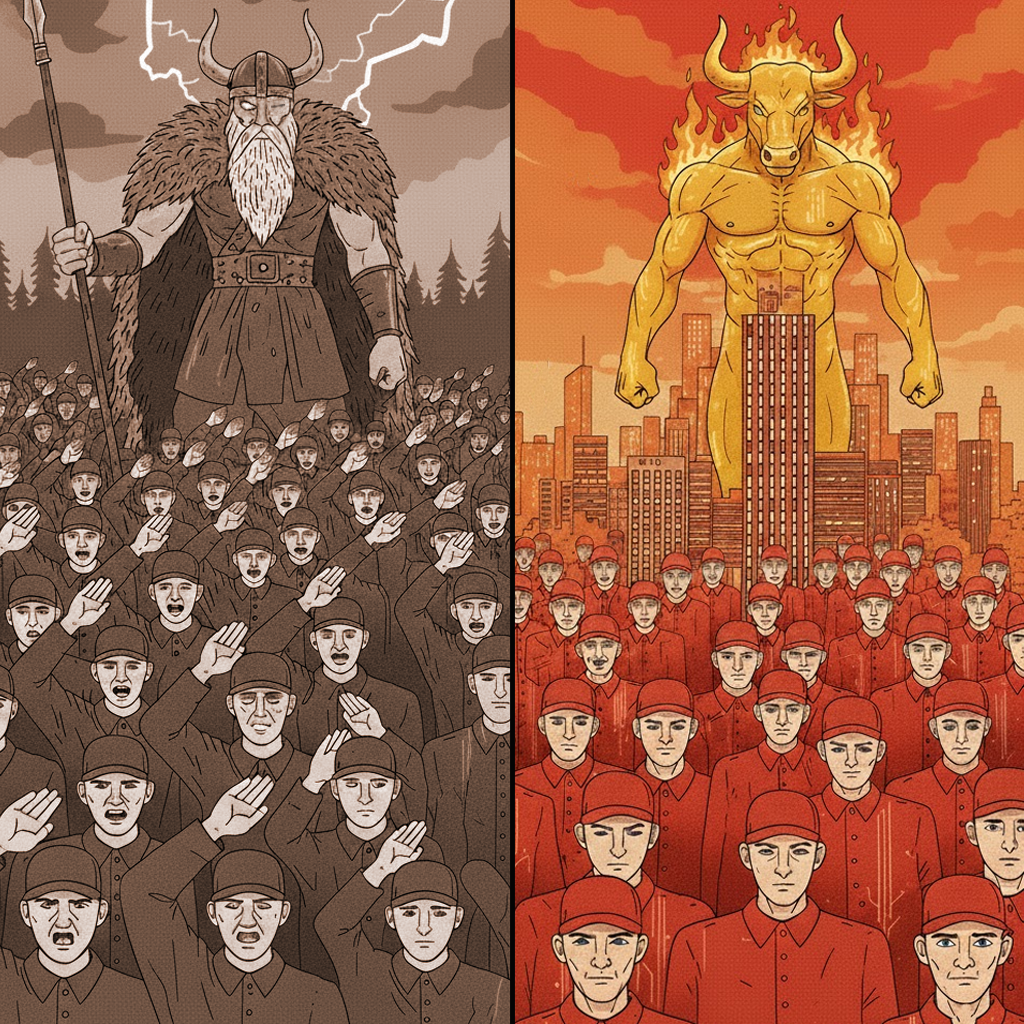
Imagine a composite photograph of many faces blended together. It shows common features but loses every individual nuance. Jung argued that when we embrace the idea of a ‘Quantifiable Human,’ we are, in essence, creating these Galtonesque portraits of ourselves. We emphasize the measurable, the generalized, the easily categorized, and in doing so, we unwittingly efface the unique, contradictory ‘features’ that make us truly unique.
The Lunatic Asylum: The Danger of the ‘Purely Quantified’ Individual
Jung’s most striking statement about the perils of extreme one-sidedness applies powerfully to the idea of the perfectly ‘Quantifiable Human.’ He famously declared:
“There is no such thing as a pure extrovert or a pure introvert. Such a man would be in a lunatic asylum.”
— Psychological Types (Collected Works, Vol. 6)
For Jung, psychological health was not found in being a perfectly consistent, easily definable ‘type’ or having all your metrics align neatly. On the contrary, such extreme one-sidedness implied a pathological rigidity, a repression of the vast, unquantifiable opposing forces within the psyche. The path to individuation—the lifelong journey of becoming a unique, whole, and integrated self—demands the conscious integration of all our disparate parts, including the dark, the contradictory, and the deeply irrational aspects that utterly defy quantification. A person whose entire being could be mapped and measured would, by this logic, be tragically incomplete.
The Engine of Reduction: Why AI Is the Quantifiable Human’s Ultimate Test
If Jung was wary of the scientific reductionism of his era, he would certainly view the emergence of Artificial Intelligence (AI) with consternation as it drives the ‘Quantifiable Human’ into reality.
AI, particularly the deep learning models that power everything from recommendation systems to generative text, operates on an intrinsic principle of quantification. AI reduces human reality to data and then reconstitutes that data into an amalgamation of predictable patterns. This process does not merely reflect our reductionist tendency—it exponentially amplifies the midpoint or average of it:
- AI Demands the Measurable: AI cannot process the quality of a symbol, the meaning of a dream, or the subjective experience of transcendence. It can only ingest and process the measurable aspects of human output: clicks, views, shares, word sequences, and pixel values. The sheer scale of data reinforces the belief that the map (the data) is the territory (the soul).
- The Industrial Reinforcement of the Persona: This is the most insidious mechanism of the quantification age. AI creates a dynamic, industrial-scale feedback loop that powerfully underscores Jung’s concept of the Persona—the social mask we present to the world. Algorithms learn which of our behaviors are most predictable, clickable, shareable, and profitable, and then nudge us toward those very behaviors. This system builds a digital ‘hall of mirrors’: we perform the role of the Persona, our performance is instantly quantified, and the AI feeds us a refined, optimized version of things that Persona should be interested in, compelling us to perform or engage with it again. By constantly exploiting our existing data profile, AI reinforces our narrowest, most ‘quantified’ self. This mechanism actively discourages the spontaneity, the deviation, and the necessary tension of opposites—all of which are required for the unconscious to emerge and drive individuation. The journey to the Self (the authentic, integrated core) becomes nearly impossible when the technology that dominates our lives is engineered to lock us into a profitable, shallow, repeatable role.
- The Absence of the Unquantifiable Core: AI is a sophisticated statistical mirror, capable of replicating the “Galtonesque portrait” of human output with stunning accuracy. Yet, by its computational nature, it lacks the two things Jung deemed essential to the human mind: Lived Subjectivity and the vast, symbolic Unconscious. It merely processes data about symbols and myths, never the emotional and transformative substance of them.
Jung was deeply concerned that a purely ‘scientific and technological education’ could bring about:
“…spiritual regression and a considerable increase of psychic dissociation.”
— The Undiscovered Self (Collected Works, Vol. 10)
AI, by rewarding and reinforcing only the measurable, predictable, and reductive aspects of human behavior, is the most powerful technology yet devised to enact that spiritual regression on a global scale.
The Self is Not a Spreadsheet
Carl Jung’s perspective reminds us that to chase the ‘Quantifiable Human’ is to risk a profound loss. It risks effacing our unique individual features, reducing the living complexity of the psyche to a set of metrics, and mistaking the map for the territory. The human soul, with its depths of the unconscious, its universal archetypes, and its unique, challenging path of individuation, is fundamentally qualitative—and fundamentally unpredictable. It thrives in paradox, demands a search for meaning beyond numbers, and, ultimately, resists the spreadsheet.
While AI is now the engine of this quantification, Jung would urge us to remember that the human being is infinitely more than the sum of their data points. We are, at our core, beautifully, defiantly unquantifiable. The challenge of our time is to harness the immense power of this emerging technology while simultaneously fiercely safeguarding and nourishing the irreducible dignity and complexity of the Unquantifiable Human.