We stand at an inflection point. The disparity we witness today—the homelessness amidst empty buildings, the hunger alongside food waste—isn’t an economic failure; it’s a profound expression of the Collective Shadow; and it isn’t new. We aren’t suffering from an actual lack of resources; we’re trapped within a societal pattern that enforces unjustified scarcity.
To understand this crisis, we must look beyond the political discussions of Marxism versus Socialism versus Capitalism. The problem is not the system itself, but the Collective Shadow. Any system would likely result in the disparity we see today, unless and until we examine the Collective Shadow.
A Shadow of History: Disparity Precedes the Fall
The concentration of wealth we see today is not new; it is the recurring malignancy that precedes every systemic collapse. Look back at the last days of the Roman Republic, where vast latifundia (giant estates) owned by a few Patricians destroyed the middle class of independent farmers, leading to social and military collapse. Consider Pre-Revolutionary France, where Marie Antoinette’s court operated with unimaginable luxury, oblivious to the starvation that fueled the Terror.
In American history, the pattern is just as stark: the Gilded Age Robber Barons amassed wealth so extreme it birthed widespread poverty and required the New Deal as a political band-aid. Decades later, the sub-prime mortgage crisis saw banks bailed out with trillions while the struggling populace, already suffering the political mythology of the ‘welfare queen’ since the Reagan era, was left to face foreclosures and ruin. Whereas banks received subsidies that dwarfed the public welfare system.
Yet, this disparity persists. We have consistently reconfigured the system with band-aid fixes—never fully addressing the core Collective Shadow. Our modern predicament is simply the latest iteration of this same, tragic historical pattern.
Prosperity and the Shadow of Scarcity
The modern societal system operates under a rigid construct: the illusion of infinite growth, the necessity of always improving efficiency, and the requirement of exponentially increasing value. This public mask demands that we believe in perpetual progress and a meritocracy where increased effort guarantees increased reward.
But this construct creates a shadow. Our Collective Shadow—the hidden, repressed content: uncontrolled accumulation, aggressive competition, and the unintentional creation of lack. Our society has violently rejected the knowledge of its own innate abundance, casting it into the dark to maintain the illusion of competition and need.
The evidence of this Collective Shadow is now glaringly public, exposed in the mathematics of extraction. Over the past decade, the share of total U.S. wealth held by the wealthiest 1% has grown to over 30.8%. Globally, this group has captured nearly two-thirds of all new wealth created since 2020. This massive acceleration has occurred while real median wages have remained stagnant for the typical worker. This disparity is made clear when one observes that a particular CEO makes an estimated $26.6 million dollars a day in net worth growth, while a full-time average wage worker makes around $60 a day. This is the Collective Shadow made manifest—the system’s hidden, unconscious drive played out in public, creating a disparity of opportunity for the many to ensure infinite accumulation for the few.
The Archetype of Cancer
If we apply a Jungian lens to the fundamental pathology of the system itself, the archetype that emerges is that of cancer: Nothing in nature grows indefinitely, except cancer.
In nature (and in the healthy, individuated Self), growth is cyclical and balanced. Our system’s collective compulsion for infinite, exponential profit is the psychological equivalent of a cell that refuses to adhere to the body’s limits. It’s a malignant pattern that destroys its host—the Earth and the majority of humanity—in its pursuit of endless self-expansion. This is not a rational economy; it is a collective compulsive fixation demanding infinite growth from finite resources.
Fake Scarcity: The Mechanism of Dysfunction
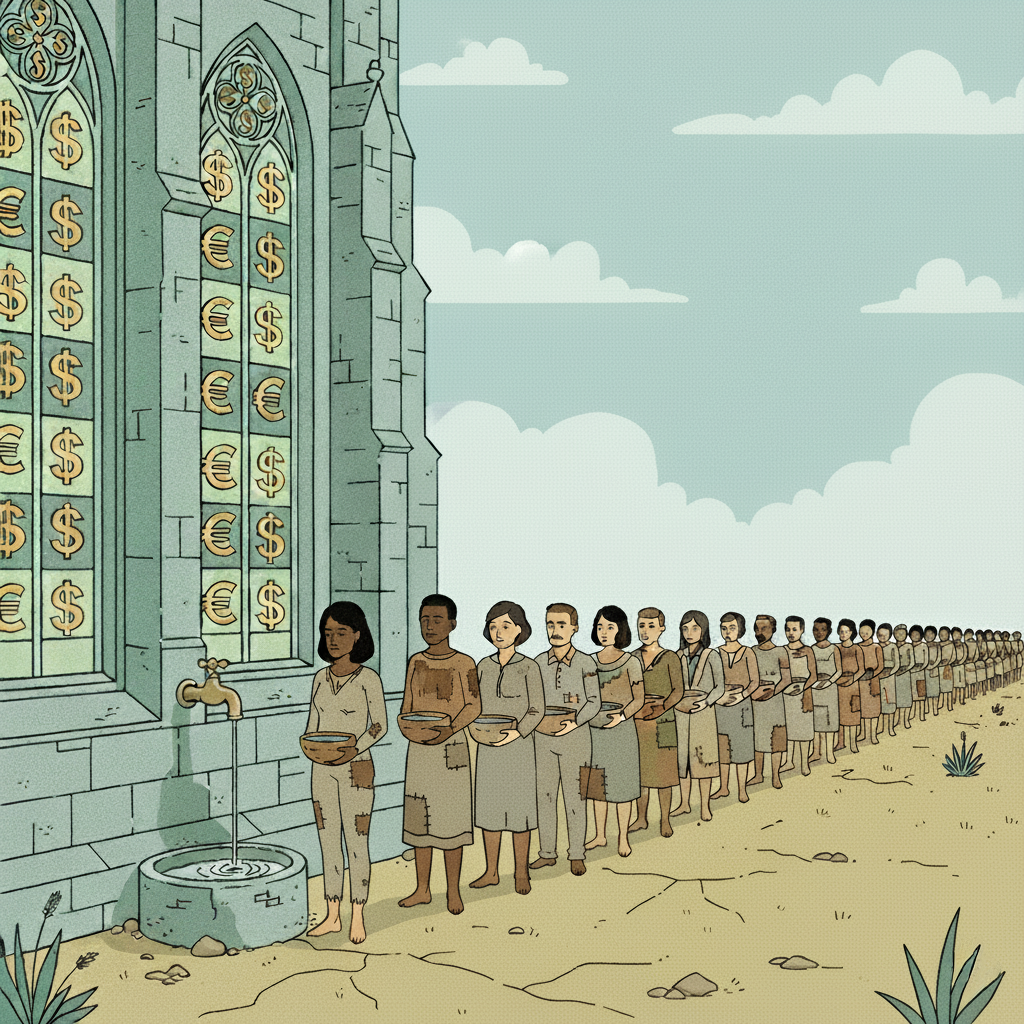
This malignancy is maintained by the systemic failure to distribute abundance, using the lie of scarcity as its primary weapon. This is achieved by the rigid market control over the supply side of the ‘supply and demand’ equation. By constraining supply, the system ensures that demand always remains high, thereby justifying extreme cost and perpetual profit. The two most basic human necessities, housing and food, provide a clear view of this dynamic in action.
Housing: This is the most visible act of hoarding. In the United States, there are over 14 million vacant homes coexisting with a homeless population that recently surpassed 770,000 people. This means that, on average, there are over 20 vacant housing units for every single person experiencing homelessness. The scarcity is not in housing units, but in access. These empty units are treated as financial assets, left vacant to inflate the cost of living—a calculated act of unhealthy financial prioritization that feeds the Collective Shadow’s need for uncontrolled accumulation.
Food: The abundance of food is systematically destroyed. Globally, an estimated 30% to 40% of all food produced is lost or wasted. This massive destruction is an economic necessity for the system; introducing this abundance into the market would lower prices, thereby hurting corporate profits. The abundance is literally left to rot to maintain the illusion of supply pressure and, thus, artificially control the ‘supply’ component of the market.
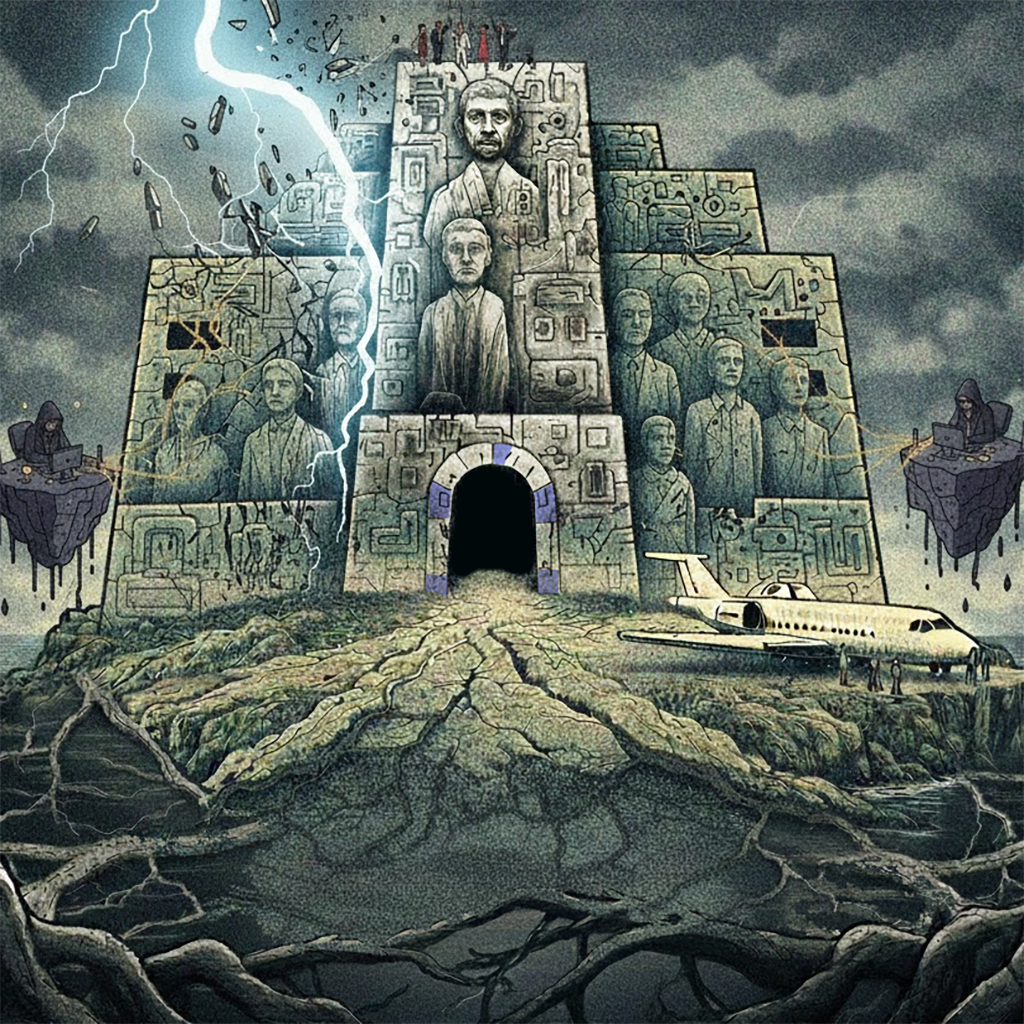
This system of unjustified scarcity relies on a corrupted order that no longer bothers to hide its motives: Corruption has become public spectacle; it no longer hides because it has been normalized. The mechanisms of policy lobbying and tax codes privileging capital over labor are performed in daylight as part of the collective ritual of denial. Even among the proletariat, cries of ‘No handouts!’ reveal how deeply the identification with the established hierarchy has been internalized. The system has fully integrated its corruption and openly dares us to do anything about it.
Yet what appears modern is, in truth, archaic.
A Collective Regression
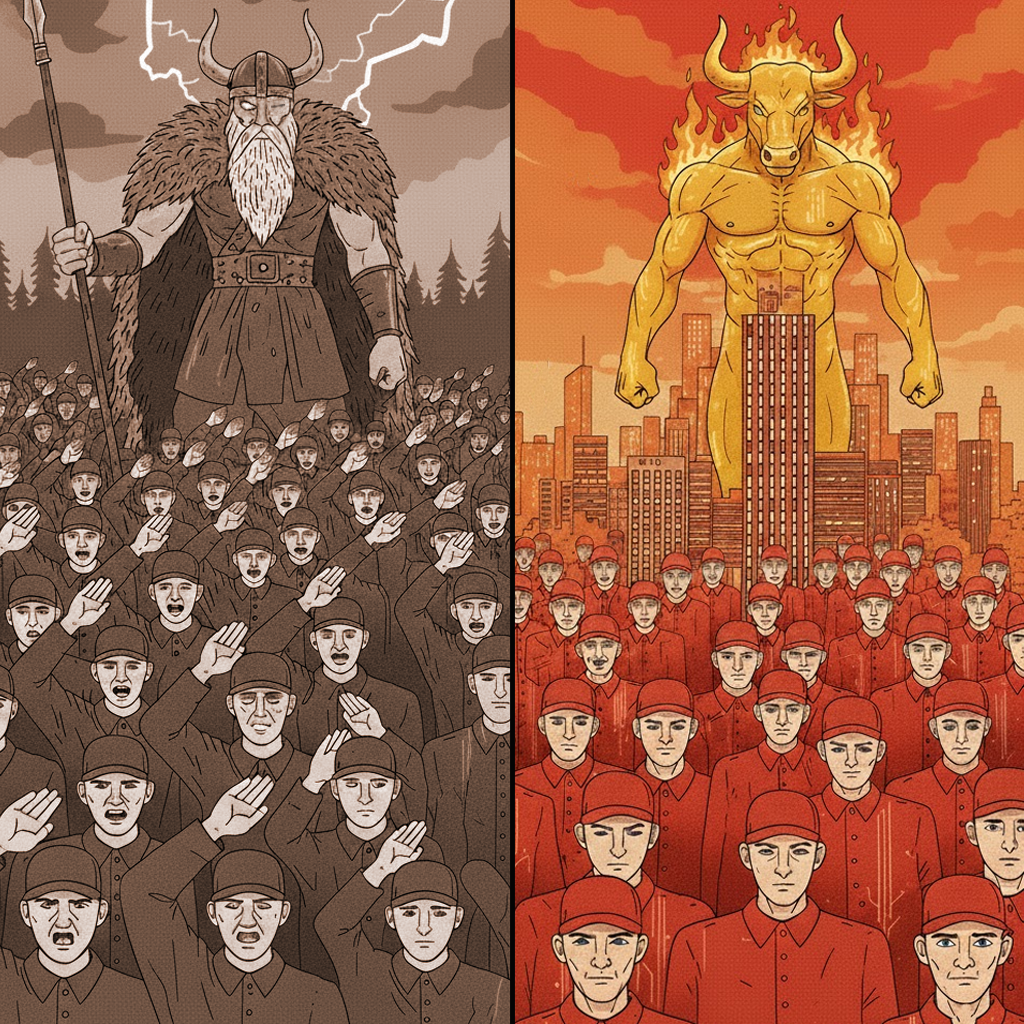
We’re experiencing a new version of Feudalism; no matter what we call it, it is the same old game. This phenomenon can be understood using the Jungian concept of Regression—except on a collective scale. I’d posit that this is Collective Regression to something akin to Feudalism.
The tragic historical cycle we’ve observed in the Roman Republic and Pre-Revolutionary France—where extreme wealth concentration preceded collapse—was rooted in the unconscious impulse to hoard. Our modern system has simply exchanged the latifundia and the King’s Land for controlling access to the means of livelihood.
I assert that our society has regressed to a state of Feudal Psychology. In Feudalism, the elite owned the Land and the masses were dependent; not quite free but not exactly slaves. In our society, the elites control the systems and the masses are locked into a state of serfdom enforced by debt, rent/mortgages, work-dependent health insurance, and unjustified lack.
This system is an ancient configuration of dominance and submission dressed in modern costume. It is a massive block to Individuation, the process of becoming a unified, whole person, because it forces the vast majority to dedicate their entire lives to surviving the unconscious scarcity enforced by the apparatus of the extractive system.
Conclusion: Confronting the Lie
We are not poor; we are not lacking abundance; the planet is not running out of resources.
The fundamental shift, therefore, is recognizing the difference between physical resource limits and socially and politically enforced scarcity—the central mechanism of our extractive systems.
The dam holding back the flow of human and natural abundance is not made of steel or concrete, but of fear, delusion, and an archaic power complex. Our only path to collective flourishing is to bypass the band-aid fixes and confront the Collective Shadow of the system directly. We must affirm the reality it passionately denies: We have enough for all.
May we find the courage to confront the lie and reclaim the abundance that is already ours.